
I’ve been thinking a lot about the word “elevated” when it comes to literature. What does it mean exactly? Does “elevated” literature have complex diction and sentence structure? Is it lyrical? Are elevated stories character-driven, or do they have serious or thought-provoking themes about the human experience? Is the tone somehow lofty or sophisticated?
And if we accept that some fiction is “elevated,” can we apply the term to popular, commercial, or genre fiction? Some posit that “upmarket” or “book club” fiction is its own genre — a satisfying blend of commercial and literary fiction. Do these categorizations even matter?
I’ve been devouring psychological thrillers and suspense fiction for the past year and, in retrospect, feel that some of the novels I’ve read are indeed “elevated” in some way — the prose is particularly beautiful, or the characters are particularly well-developed, or the reading experience is particularly sublime.
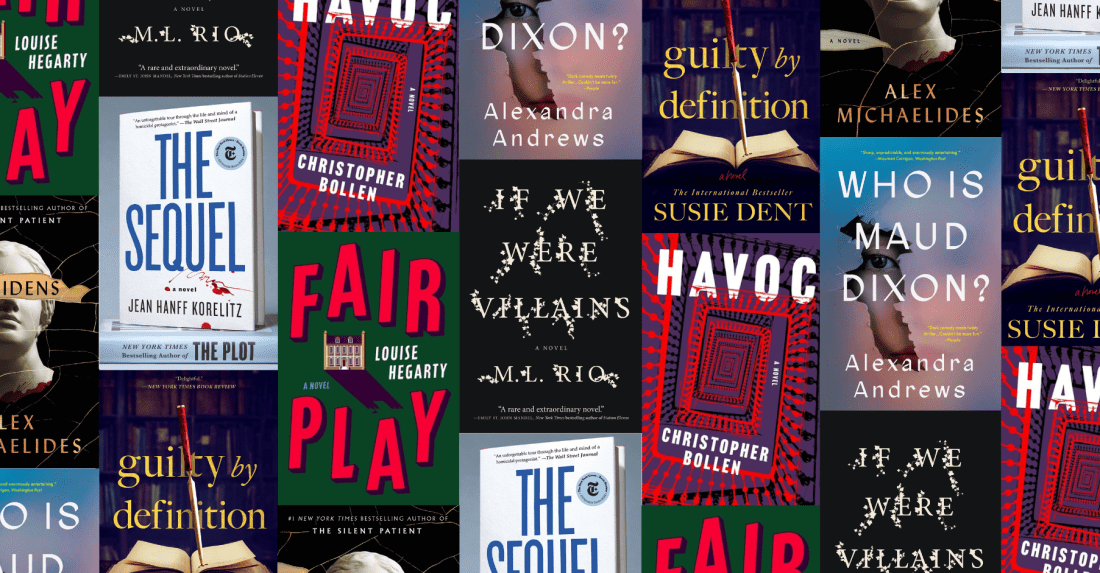
Below are seven novels that are thrillers in the traditional sense — they are high-stakes, fast-paced, and rife with surprising, even harrowing, twists and turns — but also bring something more to the table.
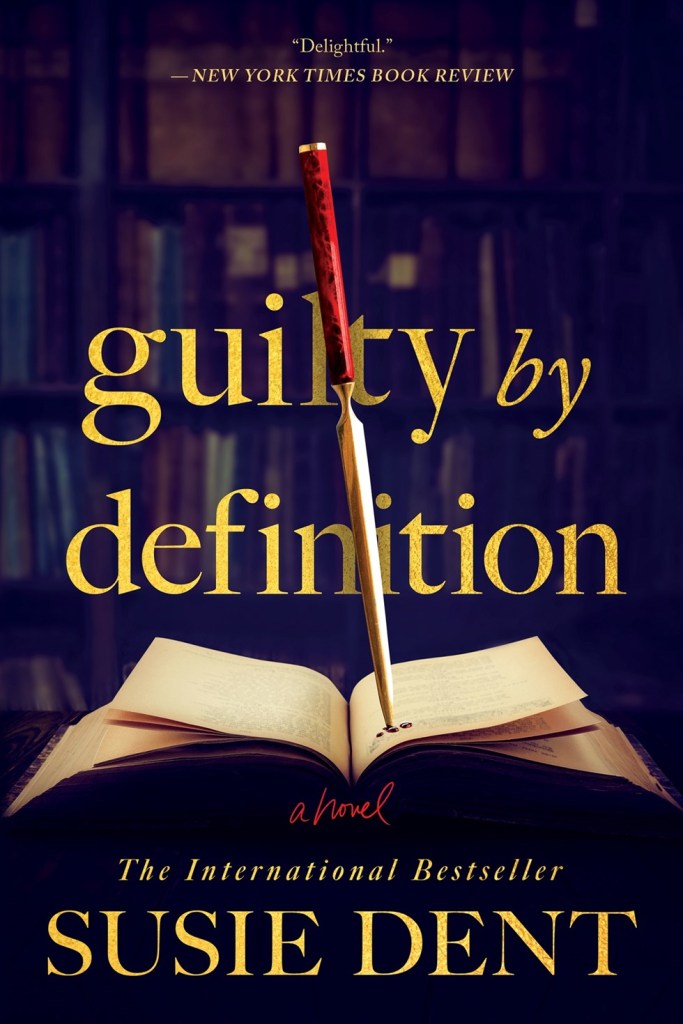
Guilty By Definition
By Susie Dent
Who knew that dictionary-makers could be such intrepid detectives? This is English etymologist and lexicographer Susie Dent’s first foray into fiction. Martha Thornhill, senior editor of the Clarendon English Dictionary, and her Oxford-based staff investigate a series of cryptic letters from an anonymous author named “Chorus,” letters that connect to the disappearance of Thornhill’s sister thirteen years earlier. The language — the linguistic clues and wordplay — elevates. It was fun to follow along as our detectives decode the letters using measures of music or the rhyme scheme of a Shakespearean sonnet.
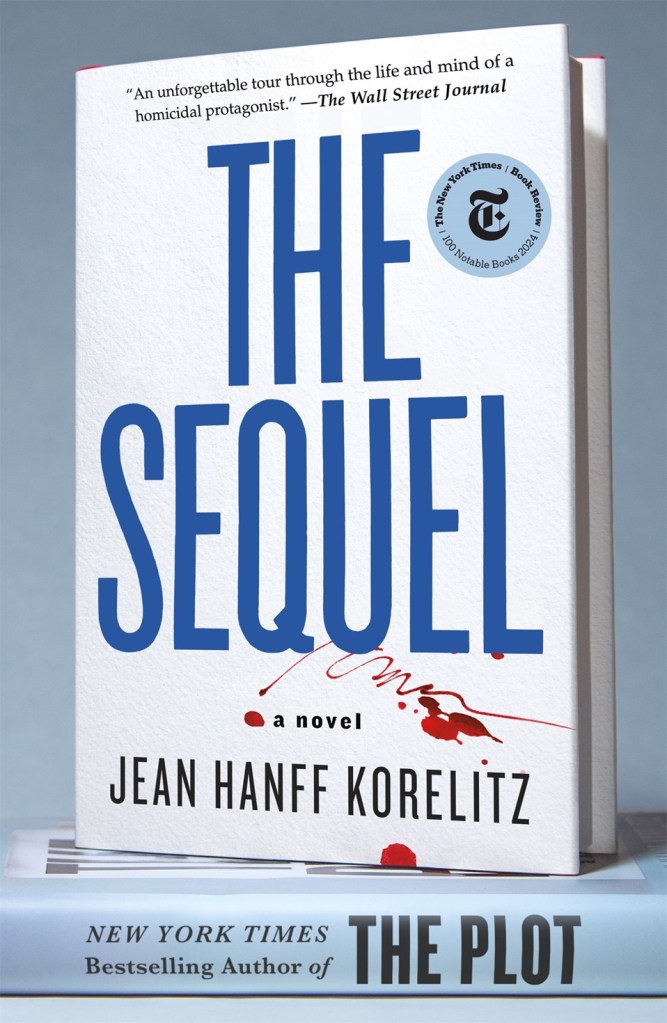
The Sequel
Jean Hanff Korelitz
No list of elevated thrillers is complete without Korelitz’ The Plot (2021) or its sequel — yes, The Sequel (2024). The Sequel is an in-depth character study of antihero Anna Williams-Bonner, the wealthy widow of literary sensation Jacob Finch-Bonner. After getting trolled anonymously about her past and about her own debut novel, Anna acts to protect her personal and professional reputation and to guard the sins of her past from exposure. I consider this novel elevated because of its focus on character and its meta nature — it is both a thriller and a satire that prompts the question: Who really owns a story?
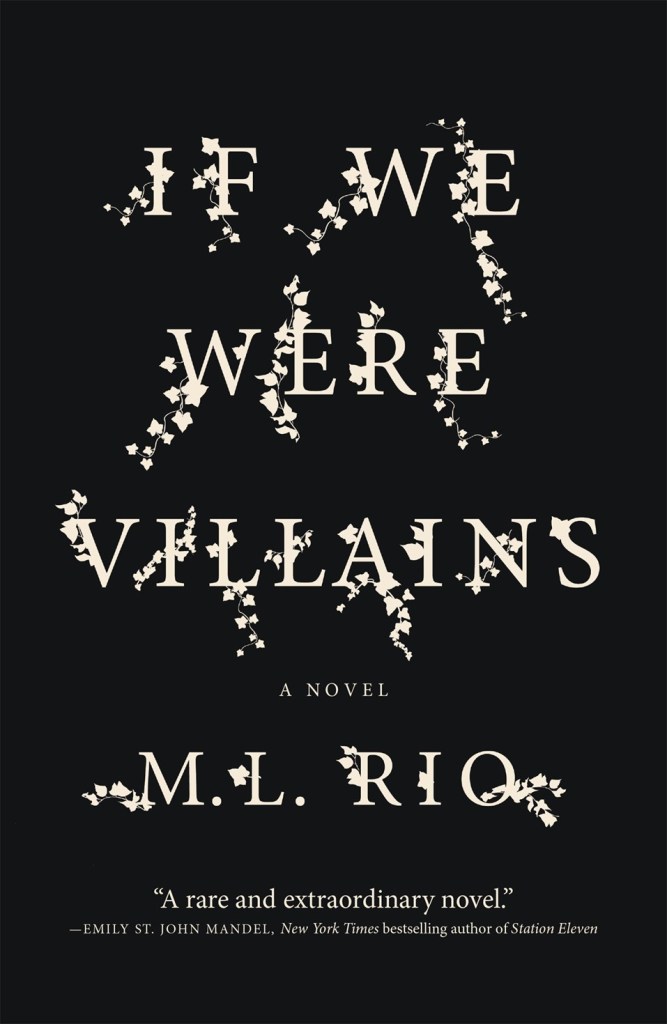
If We Were Villains
ML Rio
Attention, Shakespeare and “dark academia” fans: this one’s for you. Oliver Marks has just served ten years in prison for murder. The man who put him there, Detective Colborne, on the eve of retirement, wants to know what really happened a decade ago at the elite Dellecher Classical Conservatory, where the rivalries of seven fanatical student actors precipitated the death of one. The author is a former actor with an MA in Shakespeare from King’s College London and Shakespeare’s Globe. If you liked Donna Tartt’s The Secret History or Julia May Jonas’ Vladimir, read this.
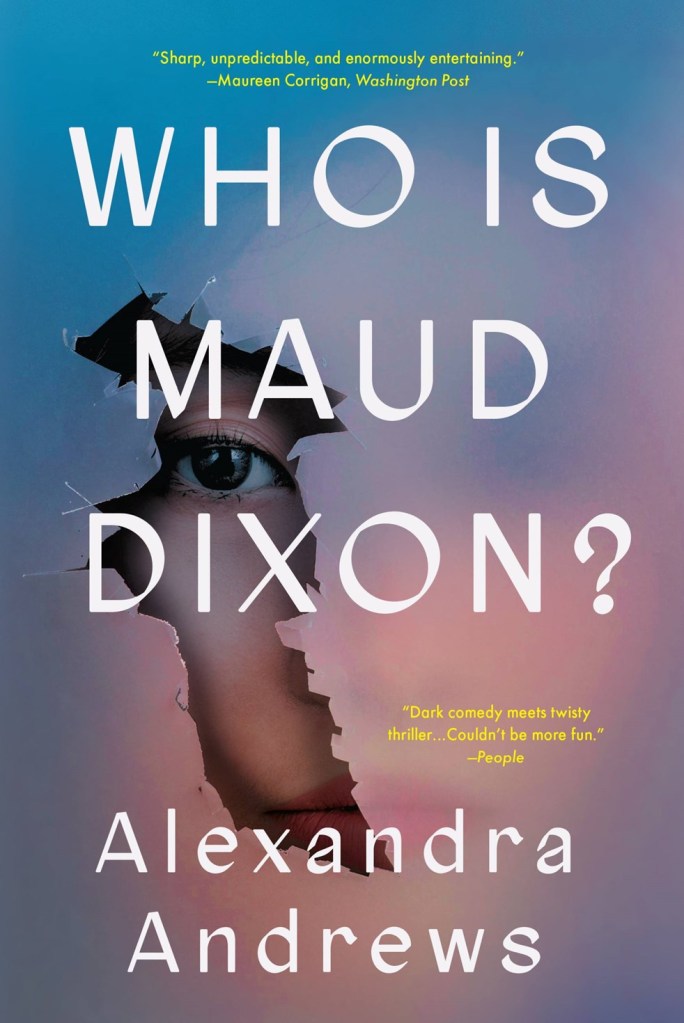
Who is Maud Dixon?
Alexandra Andrews
Cue yet another antihero in Florence Darrow, who dreams of — feels entitled to? — literary greatness. Florence becomes the publishing assistant to Helen Wilcox (pen name Maud Dixon), who has written a bestseller, “Mississippi Foxtrot.” While the pair is on a literary fact-finding trip in Morocco there is a car accident, and Florence wakes with amnesia to find that Maud has disappeared. The opportunity to steal Maud’s life and identity is too enticing to ignore. The twists and turns in this one are fan-freaking-tastic.
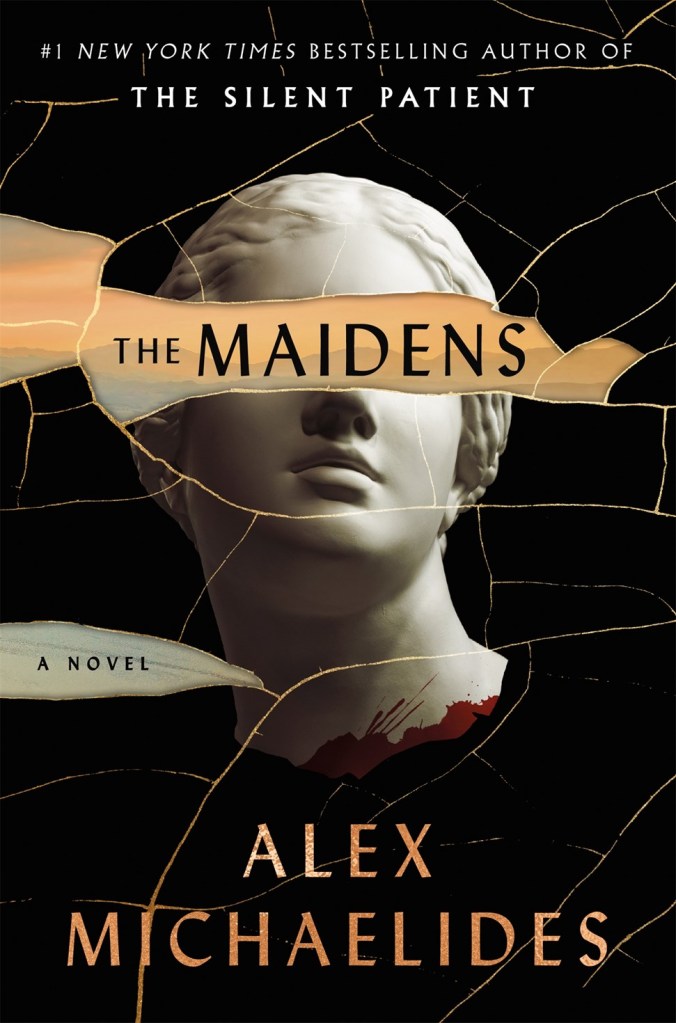
The Maidens
Alex Michaelides
All of Michaelides’ oeuvre (The Silent Patient, The Fury) could appear on this list, but I choose to highlight The Maidens. Set at Cambridge University, psychotherapist Mariana Andros ends up investigating the death of a female student who was connected to a secret society of women called “The Maidens” led by Edward Fosca, a professor of Greek tragedy at the university. There are multiple allusions to Greek plays and playwrights (eg, Euripides) and to the myth of Persephone. There are tons of red herrings in this one.
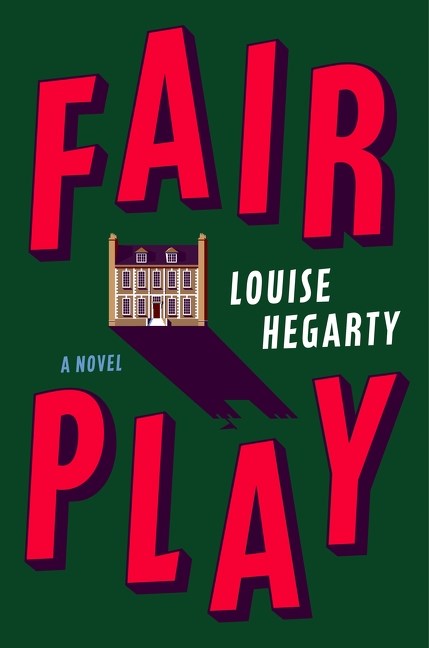
Fair Play
Louise Hegarty
A murder mystery-themed New Year’s Eve party at an Irish country house ends with the death of the hostess Abigail’s brother Benjamin, who was playing the murderer. There are two layers here. Abigail’s experience of grief, her “coming-to-terms” with Benjamin’s death, is one layer, and beautifully told. Overlaid on that is another layer, an Agatha Christie-esque whodunit with “consulting detective” Auguste Bell. What makes Hegarty’s debut locked-room mystery elevated for me is the awareness of itself as an homage to the Golden Age of detective fiction. There are even “dramatis personae” and “rules” for fictional mysteries from the 1920s.
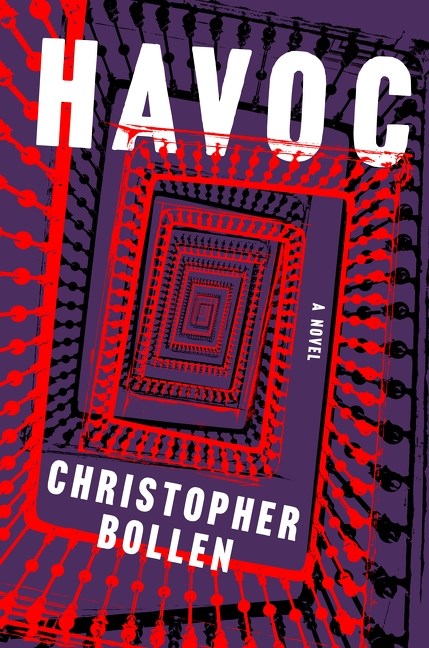
Havoc
By Christopher Bollen
Though not set in literary or academic circles, Havoc feels very much “of a piece” with the other novels on this list. It makes me think of an Alfred Hitchcock film, unsettling and uncanny. It’s set during the Covid-19 pandemic at a luxury Egyptian hotel in Luxor, where we meet 81-year-old American expat Maggie Burkhardt. Maggie is not some “sweet old lady” but a meddlesome and self-important busybody with a dark past. The joy in reading Havoc comes from our “superior position” — we have more knowledge than the characters, and the dramatic tension is delicious as we watch the cat-and-mouse game played by Maggie and an 8-year-old “bad seed” named Otto, who might just be Maggie’s equal in villainy.


